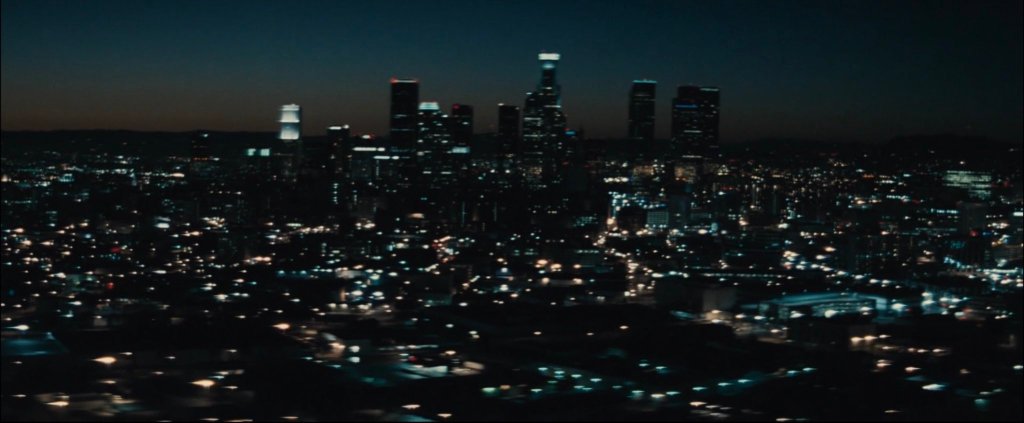

Though it was far from a box office hit upon its release in March 1998, few films over the last 25+ years have become as much a cultural touchstone as The Big Lebowski. Written by Joel and Ethan Coen, directed by the former and produced by the latter, the film begins as a tale of mistaken identities, in which Jeffrey “The Dude” Lebowski (Jeff Bridges), an unemployed bowling and weed aficionado with ties to a group of 1960’s radicals, the Seattle Seven, is accosted in his apartment by two thugs in the employ of pornographer Jackie Treehorn (Ben Gazzara). They believe him to be another Jeffrey Lebowski (David Huddleston), this one a multimillionaire whose young wife Bunny (Tara Reid) owes Treehorn money. The thugs threaten The Dude and proceed to piss on his beloved rug, one that “really ties the room together,” until they realize that they’ve probably got the wrong Lebowski.
So begins one of the funniest stories set in and around Los Angeles, littered with characters larger than life, endearing, and thoroughly entertaining. John Goodman’s Walter Sobchak is a loud and frustrating Vietnam vet, devoted to his ex-wife and The Dude; it’s on Walter’s shoulder that much of the conflict throughout The Big Lebowski transpires. Meanwhile, the Coen Brothers skewer the art world in the form of Maude Lewbowski (Julianne Moore), the “big” Lewbowski’s daughter and painter who has set her eyes on The Dude for a non-financial transaction.
And then there’s The Dude himself, the Creedence-loving, Eagles-hating star of the film, a character who is in virtually every scene. The Coens based The Dude on multiple real-world people they’d encountered over the years, including actual Seattle Seven member and movie producer Jeff Dowd, along with a former Vietnam veteran named Peter Exline, who had been a friend of Coen collaborator Barry Sonnenfeld and who allegedly also once possessed a rug that tied his rundown apartment together. Still, The Dude is very much imbued with Jeff Bridges’ own substance and style. In Ronald Bergen’s 2000 book on the Coen Brothers, Bridges says that he “drew on myself a lot from back in the Sixties and Seventies. I lived in a little place like that and did drugs, although I think I was a little more creative than the Dude.” Oftentimes at the end of a day of shooting, Bridges would go home with the clothes he was wearing, as they happened to come from his own closet.
Throughout the film, the perpetually stoned Dude is faced with a series of tasks to complete and mysteries to solve. While he often refers to the case of the “big” Lebowski’s missing wife, The Dude isn’t a detective.
This is a very complicated case, Maude. You know, a lotta ins, a lotta outs, a lotta what-have-yous. And, uh, a lotta strands to keep in my head, man. Lotta strands in old Duder’s head.
The Big Lebowski falls into the Shaggy-Dog Story genre; don’t worry if that’s an unfamiliar genre, I only discovered it a few years ago myself. The Cambridge Dictionary defines the term as “a long story that is intended to be amusing and that has an intentionally silly or meaningless ending.” It is the perfect way to describe the overall effectiveness of the film; it’s the journey, not the destination.
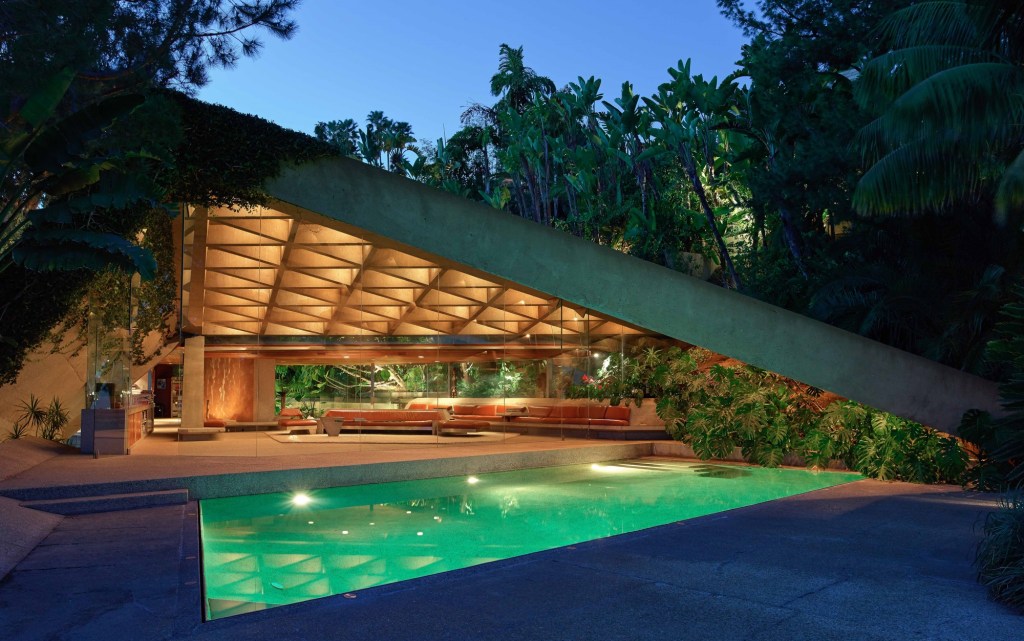
The Dude’s journey takes him to various locations across Los Angeles as he tries to crack the complicated case. Jacki Treehorn’s magnificent Malibu beach house is actually located 30 miles outside of its film setting. Overlooking LA, the Sheats-Goldstein Residence was built in 1963 for artist Helen Sheats, her professor husband Paul, and their three children. The home was designed by architect John Lautner, who had studied under Frank Lloyd Wright.
Treehorn’s abode is a huge contrast to The Dude’s own rundown, filthy apartment. While the interior, rug and all, was filmed on a soundstage, the exterior is found at 606 Venezia Avenue in Venice, which is referred to in the city as “The Big Lebowski Compound.” Sadly, the Hollywood Star Lanes bowling alley, a key location throughout the film, is no longer standing, having been torn down in 2003 and replaced with a public school.
Musically, while the most recognizable song immediately attached to The Big Lebowski is Bob Dylan’s “The Man in Me,” the Malibu-living Dylan is originally from Hibbing, Minnesota. However, the film does feature songs courtesy of a few artists directly out of L.A. The First Edition’s 1968 hit “Just Dropped In (To See What Condition My Condition Was In),” featuring future country superstar Kenny Rogers and former Dylan drummer Mickey Jones, soundtracks what’s come to be known as the “Gutterballs” dream sequence, featuring a dancing Dude and Maude.
The Eagles, one of the defining Los Angeles bands of all time, appear twice during the film. While a flamenco version of “Hotel California” performed by the Gypsy Kings plays during the first scene at the bowling alley, it’s The Dude’s visceral reaction to the Eagles’ “Peaceful Easy Feeling” that really helped cement the film’s pop culture standing.
Jeff Bridges would later tell Rolling Stone that the line got him a bit of heat with members of the Eagles, California locals whom he would occasionally bump into. “I remember I ran into Glenn Frey, he gave me some shit,” he called in 2012. “I can’t remember what he said exactly, but you know, my anus tightened a bit.”
It’s worth noting, at least for the record, that Creedence Clearwater Revival is another California band, the Dude’s favourite, but they were formed in El Cerrito, closer to San Francisco than Los Angeles.
Upon its release in the winter of 1998, The Big Lebowski didn’t do much commercial business at the box office, grossing just $18 million in North America (it would be profitable thanks to its success around the rest of the world). Throughout the subsequent decades, though, The Big Lebowski has only grown in acclaim and stature, with Lebowski Fests occurring across North America and tours offered of some of its legendary locations, while a religion called Dudeism has even sprung up, espousing the philosophy of The Dude.
Clearly, the film endures…and abides.
 City of Night
Leave a comment